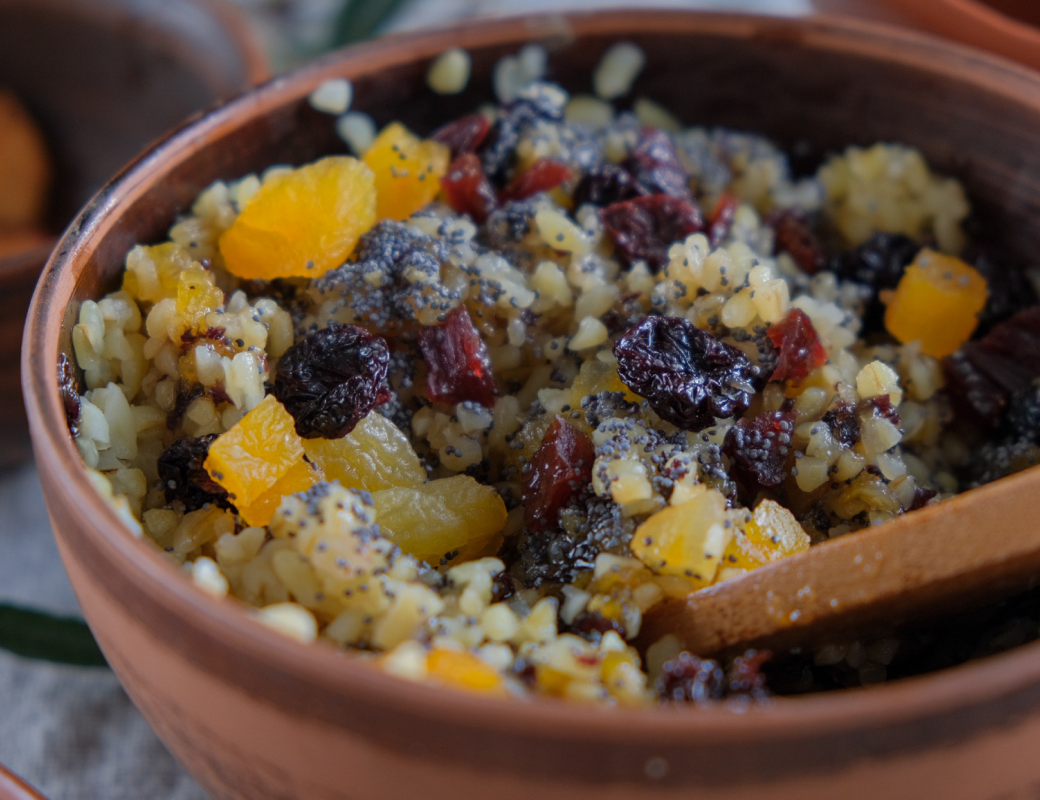
Kutya by pan taras (mr. Taras)
PREPARATION
–
PORTIONS
–
COMPLEXITY
easily
If we go back to the festive table topic, then the main dish on it is, of course, kutya. It is prepared not only for Christmas Eve, but also for St.Basil, Malanka and the Feast of the Epiphany holidays.
Hence, the three traditional kutya names:
- kutya, which is prepared for Christmas Eve, is called Rich Kutya,
- the richest in taste kutya, which is served on Shchedryi Vechir or the Feast of Malanka, is called Shchedra Kutya,
- and wheat grains mixed only with honey, which is served on the Epiphany Eve, is called Hungry Kutya.
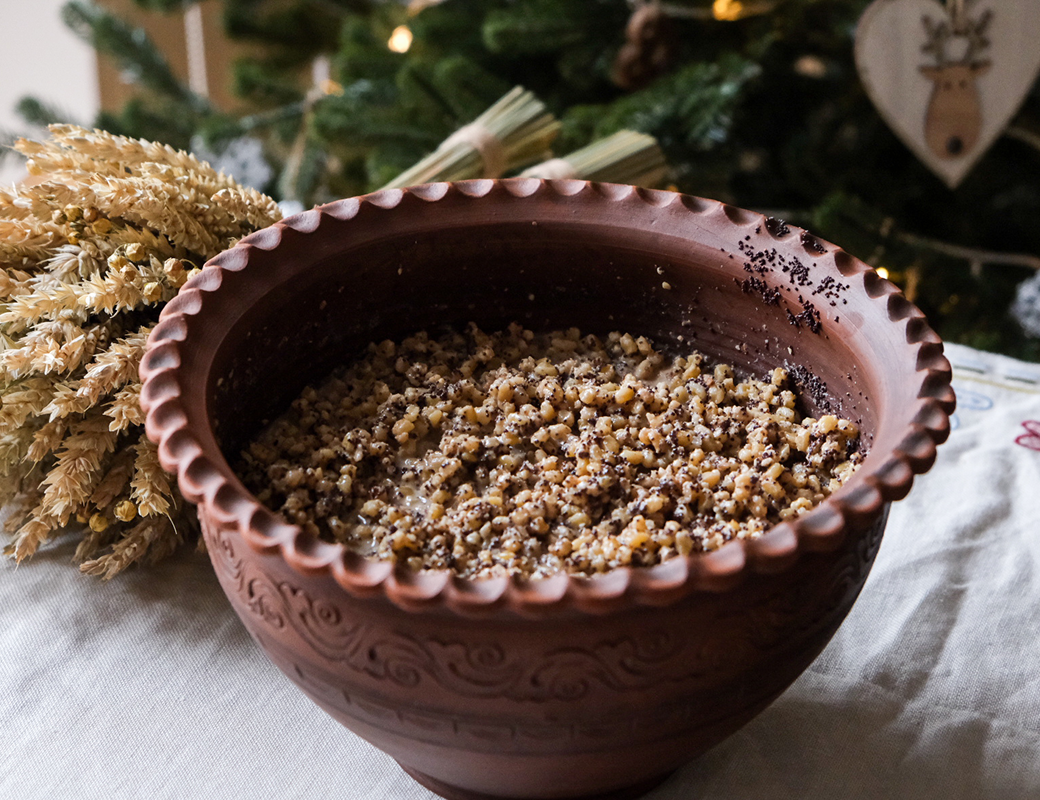
In different regions of Ukraine, kutya may differ in components and taste, but there are ingredients that we find almost everywhere: grains, wheat, barley (the oldest recipe of kutya is made from barley) or rice, nuts, poppy seeds, and honey.
Kutya was placed on a pokutya (corner of honor in the house), on hay, or beneath the icons of saints. When the dish was brought in, people would always say: “Kutya, go to the pokutya, and uzvar to the market.” In this way, ukrainians respectfully arranged dishes on a festive table.
The recipe for Kutya by Pan Taras comes from Ivano-Frankivsk, where I lived for a while at the beginning of the full-scale invasion. My acquaintance, Mr. Taras, who is 75 years old, invited me to make kutya, which I liked so much that I added its recipe to my piggy bank of recipes. In it I carefully preserve Ukrainian culinary traditions, especially holiday recipes, to remember my roots and the connection between generations, which is felt most strongly during these Christmas and New Year days.
Ingredients
- 400 gr of wheat
- 150 gr of poppy seeds
- 50 gr of sugar
- 100 gr of walnuts
- 250 gr of honey
- Water
Hello!
My name is Svitlana. I am a pastry chef, food blogger, photographer and food stylist.
⠀
My blog is about delicious food, desserts, home baking, photos, aesthetics and people.
If you want to chat or have a proposal for cooperation, write to pr@klymovska.com, or on Instagram.
Master classes
In my blog you will find master classes that will be interesting for both beginners and professionals.
I am a practicing confectioner and I will teach you how to make delicious and exquisite confections at home.
Cooking method
The quantity of ingredients may be increased depending on your needs and taste.
The day before cooking kutya, you need to cook the wheat. Rinse the wheat well, cover with water (1 liter) and cook on low heat for up to 50 minutes. Remove from the stove, cover with a lid without draining the remaining water and leave to cool down until the next day. The taste of kutya will depend on the light mass that forms at the bottom of the cooking pan while cooking wheat.
Pour poppy seeds into a makitra (a large clay bowl used for grinding or mixing foods), cover with boiling water, cover with a lid and let it soften for 20 minutes. Drain the water. Grind the poppy seeds until they turn whitish using a makogon. Add sugar and continue grinding.
Add all the wheat to the poppy seeds and pour in honey dissolved in warm water. The amount of water will depend on the consistency you want to get in your kutya, thinner or thicker.
Stir everything well with a spoon, crushing the lumps of wheat.
At the end, add grinded or finely chopped nuts.
Cover and leave in the refrigerator to rest. The kutya will become even thicker and tastier.
In different regions of Ukraine, raisins, halva, uzvar, dried apricots or other dried fruits are traditionally added to kutya.